Table of Contents
Introduction
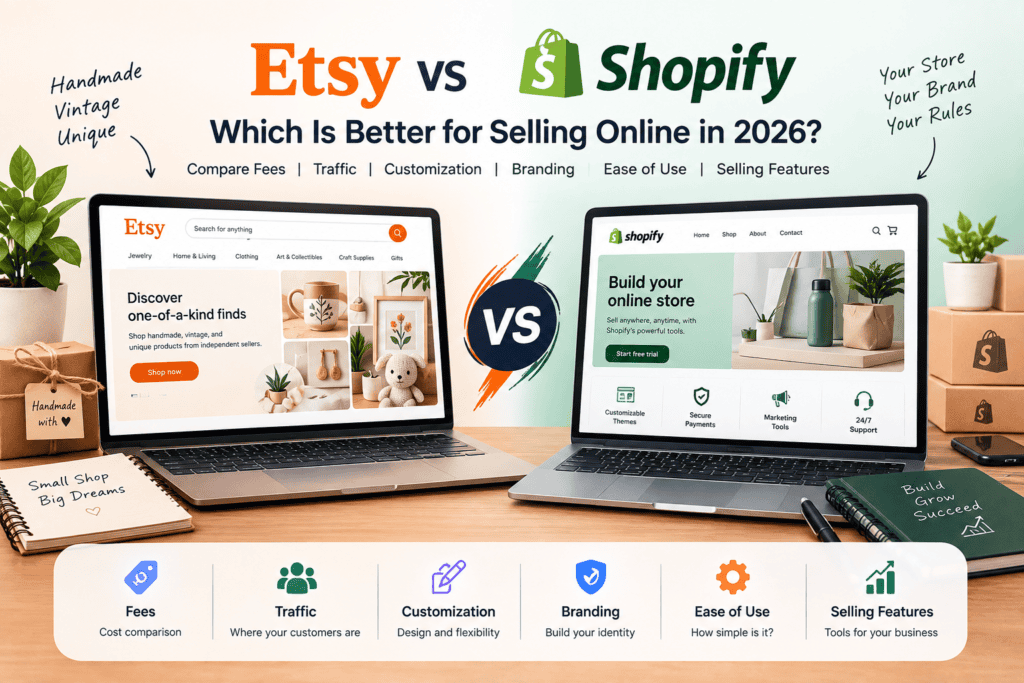
Selling online has become more accessible, but choosing the right platform can still be confusing. Etsy vs Shopify is a common comparison for new and experienced sellers because both platforms offer different ways to build an online business. Etsy is a marketplace where sellers can list products alongside other independent shops and reach shoppers already browsing the platform. Shopify, on the other hand, allows sellers to create and manage their own online store with greater control over its design, branding, and customer experience.
The better option depends on what you sell, your budget, technical experience, and how you plan to attract customers. Your long-term goals also matter. Understanding the key differences between Etsy and Shopify can help you choose a platform that fits your business needs.
Etsy vs Shopify: What’s the Difference?
Etsy and Shopify both help people sell products online, but they work in very different ways. Etsy is a marketplace where sellers list products within an existing platform, while Shopify gives sellers the tools to create their own online store. Understanding this difference is important before choosing a platform.
What Is Etsy?
Etsy is an online marketplace focused largely on handmade, creative, vintage, and unique products. Sellers create an Etsy shop, upload product listings, add photos and descriptions, and manage orders through the platform. Since Etsy already has shoppers searching for products, sellers can potentially reach an existing marketplace audience without building a website from scratch.
Common products on Etsy include handmade items, personalized gifts, artwork, craft supplies, jewelry, home décor, vintage products, and digital downloads. However, sellers still need effective product titles, tags, descriptions, and images to stand out among competing listings.
What Is Shopify?
Shopify is an ecommerce platform that allows sellers to create their own online store. Instead of listing products inside a shared marketplace, a seller gets more control over the store’s design, branding, product pages, and overall customer experience.
Shopify offers themes and customization tools that can be used to create a store that matches a brand’s identity. Sellers can also promote products through search engines, social media, email marketing, and other sales channels. This gives businesses more flexibility, but it also means they generally have to take greater responsibility for attracting customers.
Etsy vs Shopify at a Glance
The main difference between Etsy vs Shopify comes down to the type of selling environment each platform provides. Etsy operates as a marketplace with an established audience, while Shopify focuses on independent online stores.
Etsy can be simpler for sellers who want to start within a marketplace, whereas Shopify provides more control over branding and customization. Their fee structures are also different, and marketing responsibilities can vary significantly. For beginners, the better fit depends on how much control they want, how they plan to attract customers, and what they intend to build long term.
Etsy vs Shopify Fees
Cost is an important part of the Etsy vs Shopify comparison, but the two platforms charge sellers in different ways. Etsy mainly uses listing and sale-related fees, while Shopify typically works around a subscription plan plus payment and optional service costs. The actual amount you spend can therefore depend on your products, sales volume, payment method, and the tools you use.
How Etsy Fees Work
Etsy charges a listing fee when you publish a product, currently $0.20 per listing. It also charges a 6.5% transaction fee on the total order amount, including shipping and gift wrapping when applicable. Sellers using Etsy Payments also pay a payment processing fee, which varies by country.
Additional costs may apply for services such as Etsy Ads, Offsite Ads, shipping labels, currency conversion, or other optional features. This means sellers should look beyond the basic listing fee when calculating their actual Etsy selling costs.
How Shopify Pricing Works
Shopify uses a subscription-based model. Its plans have different monthly prices and payment processing rates, while third-party transaction fees may apply when a seller uses an external payment provider instead of Shopify Payments.
A Shopify store may also have additional expenses depending on the business. These can include paid apps, a custom domain, marketing, premium themes, and other services. Shopify includes hosting with its plans, so separate web hosting is generally not required.
Which Has Lower Costs?
There is no single answer because Etsy vs Shopify fees depend on how your business operates. A seller with a small number of products may focus more on Etsy’s per-listing and transaction costs, while a Shopify seller needs to consider the ongoing subscription and payment-related expenses.
A simple way to compare them is to estimate your expected monthly sales, average order value, number of listings, payment processing costs, advertising budget, and any optional tools you need. Looking at the total cost rather than one individual fee gives you a more realistic picture of your potential expenses.
Etsy vs Shopify for Beginners
Setup Process
Etsy is generally straightforward because you can create a shop and start adding listings within the marketplace. Shopify requires setting up an independent online store, including its design, products, payments, and essential settings.
Learning Curve
Etsy vs Shopify both are manageable for beginners, but Shopify offers more customization, which may take additional time to understand.
Product Listing and Store Creation
Etsy focuses on individual product listings, while Shopify gives you greater control over your complete store, product pages, navigation, and branding.
Managing Orders
Both platforms provide tools for tracking orders and managing customer purchases, although the overall workflow can differ.
Payments
Payment options and processing fees depend on the seller’s location and the payment methods available on each platform.
Marketing Responsibilities
Etsy provides access to marketplace shoppers, while Shopify sellers usually need to invest more effort in SEO, social media, email marketing, or paid advertising.
What Beginners Should Consider
Before choosing between Etsy vs Shopify, think about your budget, product type, technical comfort, marketing skills, and whether you want to sell through a marketplace or build an independent brand.
Etsy vs Shopify for Digital Products
Digital Downloads
- Both Etsy and Shopify can be used to sell digital downloads.
- Etsy gives sellers access to shoppers already looking for creative products.
- Shopify provides more control over the store and customer experience.
Templates
- Sellers can offer resume templates, social media templates, planners, and business templates.
- Etsy can make product discovery easier through marketplace search.
- Shopify can be useful for sellers building a dedicated digital-product brand.
Printables
- Printables such as planners, worksheets, invitations, and wall art are popular digital-product categories.
- Etsy allows sellers to list these products within its marketplace.
- Shopify gives sellers more flexibility in organizing and presenting their printable collections.
Design Files
- Graphic elements, SVG files, fonts, and other design resources can be sold digitally.
- Sellers should clearly explain file formats, usage rights, and download instructions.
Course-Related or Downloadable Products
- Digital guides, ebooks, worksheets, and course resources can be offered online.
- The best platform depends on the product type and how customers are expected to access it.
Setup and Customer Acquisition
- Etsy provides an established marketplace where customers can discover listings.
- Shopify requires sellers to create their own store and develop a traffic strategy.
- In the Etsy vs Shopify comparison, customer acquisition is an important difference.
What Digital Sellers Should Consider
- Compare fees, customization, traffic, and ease of use.
- Consider your product catalog and long-term business goals.
- Choose the platform that fits your selling model and marketing approach.
Etsy vs Shopify for Physical Products
Inventory
- Both Etsy and Shopify allow sellers to manage physical product inventory.
- Sellers should track stock carefully to avoid overselling.
- Shopify can provide more flexibility for businesses with larger product catalogs.
Shipping
- Sellers need to consider packaging, shipping costs, delivery times, and return policies.
- Etsy provides shipping-related tools and options that can simplify order fulfillment.
- Shopify supports different shipping setups and integrations for growing businesses.
Product Variations
- Both platforms can support variations such as size, color, material, and style.
- Clear product options help customers choose the right item before placing an order.
Order Management
- Both Etsy and Shopify provide tools for managing customer orders.
- Shopify can offer additional flexibility as a business expands and needs more advanced workflows.
Customer Experience
- Etsy provides a marketplace shopping experience shared across many sellers.
- Shopify allows businesses to create a more customized shopping experience around their own brand.
Selling Handmade and Creative Products
- Etsy is designed around categories such as handmade, personalized, vintage, and creative products.
- Shopify can also work well for handmade sellers who want greater control over their independent store.
Scaling Considerations
- Growing sellers should consider inventory, marketing, fulfillment, and customer support needs.
- In the Etsy vs Shopify comparison, long-term growth plans can influence which platform fits a business better.
Final Verdict
Choosing between Etsy vs Shopify depends on how you want to build and grow your online business. Etsy can be a practical option for sellers who want to list products in an established marketplace and reach shoppers searching for handmade, creative, vintage, or digital items. Shopify may be a better fit for sellers who want greater control over branding, store design, and the overall customer experience.
Costs, marketing responsibilities, product type, and long-term goals should all be considered before making a decision. Rather than focusing on which platform is universally better, compare the features, expenses, and selling model with your specific business needs.
Is Etsy or Shopify better for beginners?
Etsy can be easier to start with, while Shopify offers more control over your own online store.
Is Etsy cheaper than Shopify?
It depends on your sales, listings, payment processing, and other costs. Compare the total expenses for your business
Can I sell on Etsy and Shopify together?
Yes. Sellers can use both platforms to reach marketplace shoppers while building an independent Shopify store.
Is Etsy vs Shopify better for digital products?
Both can work for digital products. Your choice depends on fees, customization, traffic, and business goals.
Does Shopify bring customers automatically?
No. Shopify provides the store, but sellers generally need their own marketing and traffic strategy.
1 thought on “Etsy vs Shopify: Which Is Better for Selling Online in 2026?”